

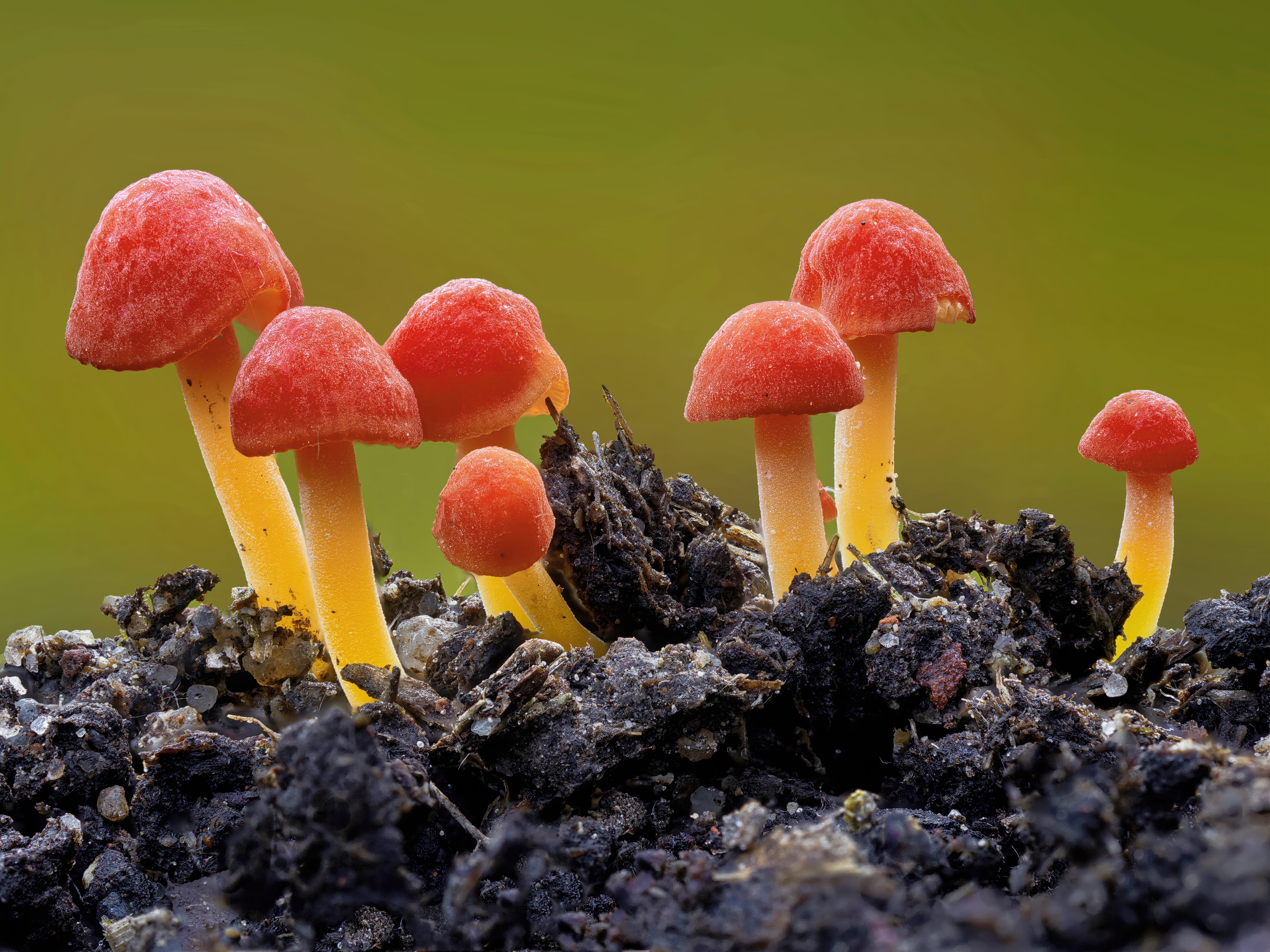
Fungi have remained elusive in broader conversations about biodiversity conservation, despite their important roles. They represent a kingdom of organisms distinct from plants and animals that includes mushrooms, molds, and yeasts and comprises an estimated 2–3 million diverse species. One group, known as mycorrhizal fungi, forms symbiotic relationships with over 80% of plants worldwide, facilitating their absorption of soil minerals and water more efficiently, while the plants supply them with food.
For the first time ever, a Global Strategy for Fungal Conservation was launched on October 21 at the COP17 event in Armenia, providing leadership for global fungi conservation.
The strategy was launched by a group of scientists from 30 countries under the Global Fungal Conservation Network. Upon its launch, the group stated that the strategy’s purpose is “to catalyse the urgent and effective conservation of fungi through policy, practice, and delivery.” The document is divided into case studies, tools and resources, and fungi-focused “Actions and Priorities” that are paired to 12 relevant Kunming-Montreal Global Biodiversity Framework targets.
“If countries are serious about meeting their obligations under the CBD [Convention on Biological Diversity], they must include fungi in their conservation and sustainability efforts,” said Cátia Canteiro, a conservationist at Plantlife International who helped lead the strategy development, in an email response to The Habibat Project. “The strategy has been developed in close alignment with the CBD Global Biodiversity Framework to facilitate that integration and reduce extra burden on countries.”
Fungal identification, conservation, and regulation efforts have been poor in Nigeria, and forest reserves that host vital fungi are regularly plagued by deforestation for commerce and agriculture.
“Talking about fungal study or fungal conservation in Nigeria, it’s not that solid,” Damilola Olanipon, a postdoctoral researcher at the French National Centre for Scientific Research, said. “It’s very understudied.”
“For example, a study I published was like the first to look at fungal biodiversity conservation (arbuscular mycorrhizal fungi) from a molecular aspect, trying to document what species of fungi are actually present in that region of my study,” she said.
Nigeria has lost about 90% of its forest cover to deforestation for agriculture and urbanization. Between 2001 and 2025, the country lost 1.6 million hectares (3.9 million acres) of tree cover. The forests are cut down in logging sprees, impacting fungi populations.
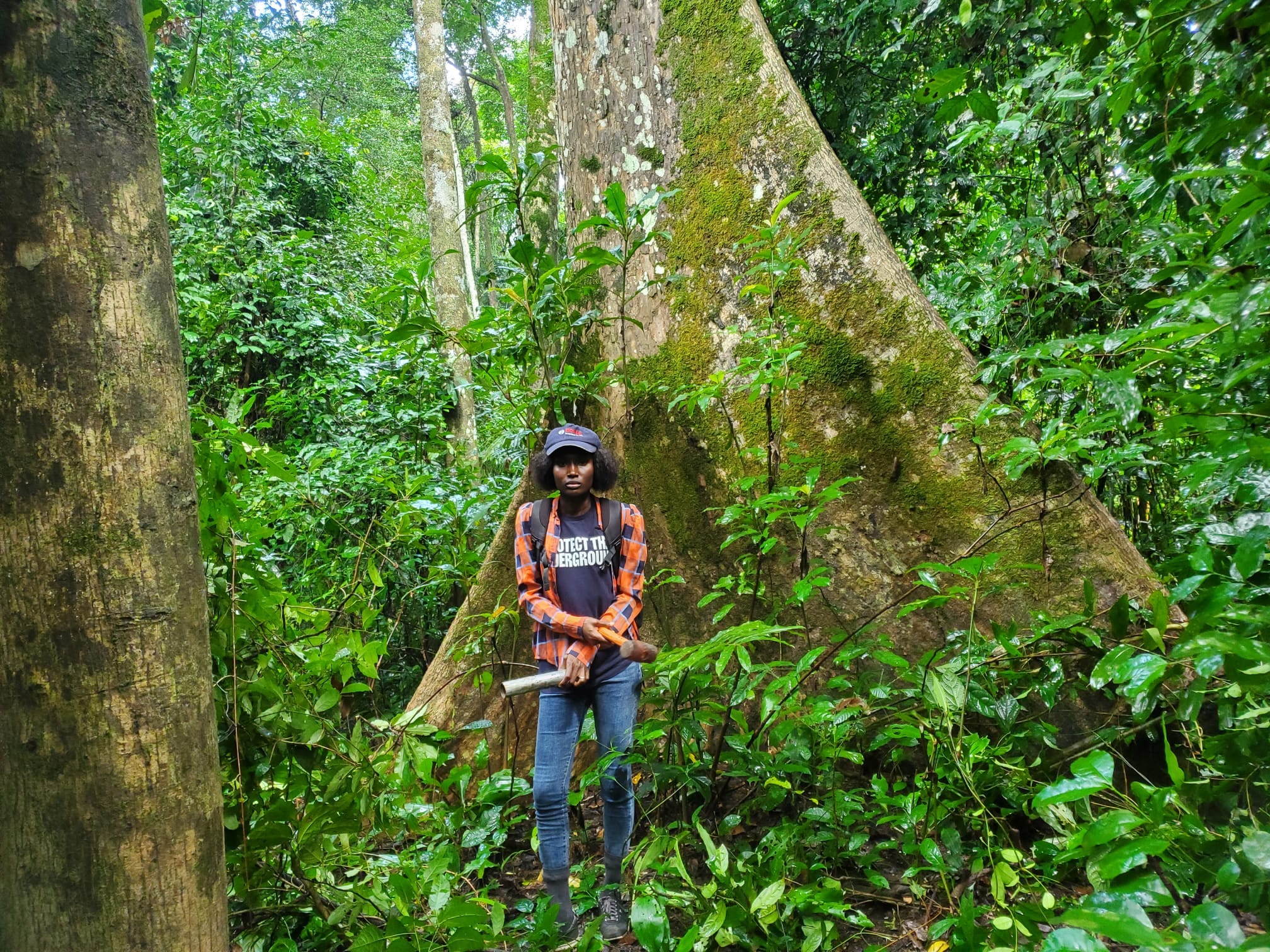
“When you clear vegetation, you are clearing [fungi] hosts, and at the same time you are clearing the associated beneficial fungal species,” said Olanipon, who regularly studies fungi dynamics in Nigerian forest ecosystems.
Some fungi are pathogenic, causing damage to agriculture. A fungal outbreak on ginger farms in Nigeria caused the country’s ginger production to drop by 91% between 2022 and 2023, the year of the outbreak, and farmers to lose money. The origin of the fungal pathogens can be unpredictable.
“These fungi can be invasive, but not always,” Canteiro said. “The best way to protect crops from pathogenic and invasive fungi is to promote native beneficial fungi that can promote resilient crop plants. These fungi act like a booster to the plant’s immune system, making them more resistant to attacks from pests and diseases.”
Another solution is through improved seed access for farmers. “If you look at the International Institute of Tropical Agriculture (IITA), they produce improved seeds that are able to resist fungal infestations, disease infestations, drought, and all of those things like that,” Olanipon added.
“I know that the [Nigerian] government is trying in giving improved seeds and all of these things to farmers, but it’s maybe not enough, so there’s a need to do more.”
As countries begin or advance their fungi conservation journeys, the strategy recommends methods such as the integration of fungi into school curricula and increased North-South knowledge-sharing partnerships. However, countries are better positioned to implement the strategy recommendations when they are first able to conduct assessments of their fungi population and protect areas abundant with them.
“For a country like Nigeria where there are still large knowledge gaps on fungal diversity, the fastest and most effective actions to take are to protect areas of likely high fungal diversity and the habitats and functional groups that sustain them, and promote land management practices that are fungi-friendly, such as no tillage and reducing the use of synthetic nitrogen and fungicides,” Canteiro said.
“At the same time, it is important to start building the capacity to produce national fungal inventories and integrate fungi into existing assessment and planning work.”
The strategy highly recommends the inclusion of Indigenous groups and local communities in fungi conservation policymaking. In Nigeria, many communities such as Ikwerre (Rivers State) and Akoko-Edo (Edo State) are actively involved in harvesting, consuming, and selling mushrooms, and have abundant ecosystems that host them naturally in the wild. Mushroom farmers are represented by the National Mushroom Growers, Processors, and Marketers Association of Nigeria (NAMGPMAN) and the Nigeria Mushroom Farmers Association.
“For Nigeria, a practical first step would be to identify exactly which species are being sold and exported, in what volumes, to where, how they are being harvested, and by whom. It is important to bring in the harvesters, especially the women’s groups and market traders, from the start and truly listen to their needs and knowledge when the rules are being developed,” Canteiro explained.