GEF-9: How Nigeria is Preparing for the New Funding Cycle
Nigeria is preparing GEF-9 projects with greater focus on livelihoods, despite ongoing challenges with funding and monitoring in initiatives like the Great Green Wall.

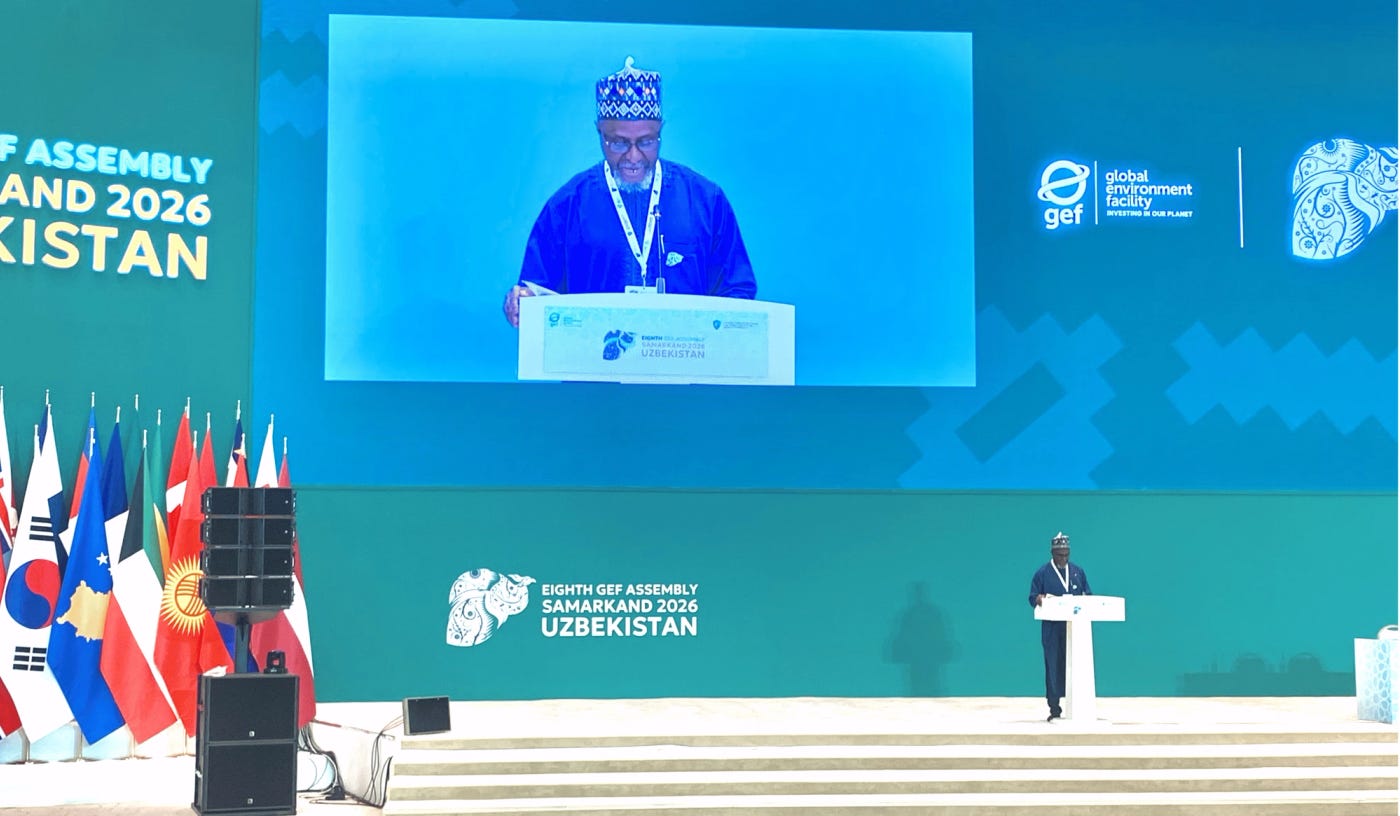
Following the conclusion of the Eighth Global Environment Facility (GEF) Assembly on June 5, Nigeria is seeking to align its GEF-9 project proposals with new priorities on livelihoods and people-centered development, while incorporating Scientific and Technical Advisory Panel (STAP) recommendations on hydrological patterns. STAP is an independent scientific advisory body to the GEF.
The Nigeria Climate Adaptation–Erosion and Watershed Project (NEWMAP-EIB), a five-year initiative designed to tackle soil erosion, land degradation, and climate vulnerability, will submit proposals to the Federal Ministry of Environment for evaluation. The initiative aims to tap into GEF funding to enhance its livelihoods component. Speaking on this, the national project coordinator of NEWMAP-EIB, Anda Ayuba Yalaks, noted that livelihood development has always been central to the project since the World Bank-supported NEWMAP phase. He expressed hope that the livelihoods and climate change response components would be reinvigorated to better address poverty among women and youths.
GEF-funded projects focusing on livelihood development under the seventh funding cycle (GEF-7) have been particularly beneficial to communities across Ondo, Delta, Ogun, and Edo states. “GEF has assisted the National Park Service in no small way,” recalled the conservator-general of the Nigerian National Park Service, Ibrahim Goni, when asked about livelihood development projects facilitated by GEF. “They are also supporting the National Park Service and the Ogun, Delta, Ondo, and Edo State Governments in the ecological restoration of degraded areas like Omo Forest Reserve, Gelegele Forest Reserve, and in the J4 Area. These are being done under GEF-7,” he added.
The GEF-7 project that the conservator-general was referring to is a five-year initiative aimed at conserving biodiversity, promoting sustainable use, and restoring lowland forest landscapes in Ogun, Edo, Delta, and Ondo States. The project was approved in December 2023 and is expected to run until 2028. Implemented by the Food and Agriculture Organization (FAO) in collaboration with the National Park Service, it has received a GEF grant of US$3.5 million, with expected co-financing of approximately US$33 million. The project seeks to improve sustainable management of forest resources and strengthen the livelihoods of Indigenous Peoples and Local Communities (IPLCs) in the target areas.
Some milestones of the initiative were completed and commissioned on June 9 by the minister of environment, Balarabe Abbas Lawal. Goni explained that the commissioned projects include the construction and furnishing of accommodation facilities for rangers and forest guards. According to him, GEF, through the FAO, also supported the training of personnel and supplied sophisticated kits, including ICT equipment, GPS devices, patrol kits, sleeping bags, and camping tents. Goni added that he looks forward to greater support for training and livelihood programmes under GEF-9.
The livelihood component is strongly emphasized by the GEF, and projects will now be assessed using a new metric, according to approved Council documents. The GEF-9 Results Management Framework will introduce new indicators that track how projects contribute to improved livelihoods, women’s empowerment and participation in environmental and natural resource management, and the creation of an enabling policy environment for environmental sustainability. This framework will be applied during the project approval process. Therefore, when Nigerian implementing and executing agencies submit projects through the Project Identification Form (PIF), they must clearly demonstrate the expected results using the specific indicators across GEF thematic areas, with particular emphasis on livelihood improvements.
The Role of Green Water Dynamics in GEF-9 Projects
Another important area of assessment for Nigerian projects will be the integration of green water dynamics. Green water refers to rainwater stored in the soil and available to plants, as opposed to blue water found as rivers, lakes, and oceans. This was highlighted by Sunday Leonard, secretary of the Scientific and Technical Advisory Panel.
“Blue water is not the complete hydrological side. The hydrological cycle also includes water that is in the soil that gets evaporated in the atmosphere, and the uniqueness of that is that there’s transboundary relationship in that kind of water, because as the water vapor flows, it influences whether it’s going to rain somewhere else, and so on. Our governments currently only focus on blue water that looks more tangible than green water, and our advice is that you have to incorporate all of that water when you think of how you manage water, so that’s basically what we mean by the global hydrological cycle,” Leonard explained.
STAP’s guidance for the GEF-9 cycle strongly emphasizes hydrological influences on environmental degradation, an area the Panel will scrutinize closely in project submissions. At the PIF or concept stage, STAP reviews projects and, for GEF-9, will particularly look for those projects with indicators that show that they integrate green water dynamics with blue water, ensure forest sustainability, and incorporate water-conserving agricultural and agroforestry practices.
Challenges to GEF Projects in Nigeria and the Way Forward
Some state governments have previously failed to fulfil their counterpart funding obligations for certain GEF projects, and this has stalled implementation and even threatened the renewal of some projects, Goni admitted. He observed that this has remained a persistent challenge to project sustainability at the state level and is only now being resolved under the current federal administration.
“[GEF and its implementing agencies] will expect that where they are working, the country should be able to pay the salaries and allowances of the staff. That to them is counterpart funding,” he said.
“But in most of the states, salaries and allowances sometimes [are not paid to the project staff], except for this new government that is seriously assisting governors to pay salaries. But in the past we have had this kind of challenge, where counterpart funding does not come from the states or is being delayed.”
He added that GEF-funded projects must be properly maintained after restoration. According to him, while implementing agencies often quantify restoration achievements in monetary terms, many projects eventually become moribund due to a lack of local ownership. On the part of the National Park Service, he said the agency continues to conduct sensitization and awareness programmes to ensure that communities take ownership of the projects in their areas and do not reject them, as has happened several times in the past.
Poor monitoring and evaluation continue to plague some GEF-financed projects in Nigeria, including the Great Green Wall initiative. The lack of effective monitoring of the initiative by the National Agency for the Great Green Wall (NAGGW) that is meant to benefit the 11 frontline states of Sokoto, Kebbi, Kastina, Zamfara, Kano, Jigawa, Bauchi, Gombe, Yobe, Borno, and Adamawa has resulted in many tree-planting sites being abandoned and converted into farmlands, high mortality of planted seedlings, and the collapse of boreholes meant to supply water to the plantations.
Speaking on the issue of poor monitoring and evaluation of environmental projects, Babagana Bukar, Nigeria’s GEF Operational Focal Point, acknowledged that the problem is a persistent one in the country. He attributed the solution to building staff capacity and strengthening knowledge management. Bukar stated that the Federal Ministry of Environment will pursue capacity building and training programmes across the ministry. He also emphasized the importance of knowledge transfer from senior to middle-level management so that expertise and project information are retained for continuous implementation. He added that such information should be accessible through the Freedom of Information (FOI) Act.
However, Domoina Rakotobe, senior programme officer for technical assistance and capacity building at the High Ambition Coalition (HAC), of which Nigeria is a member, argued that transparency is more important. She noted that information and knowledge on projects should be readily available to the public without having to resort to the FOI Act.
Nigeria’s success in meeting its environmental targets under the GEF-9 cycle (which ends in 2030) will depend on how well its projects benefit local communities, integrate sustainable green water management, and achieve genuine local ownership.
This story was produced as part of a reporting fellowship to the Eighth GEF Assembly supported by Internews’ Earth Journalism Network.

